The summary of my clay career such as exhibitions, events I have been invited to and my works that are collected by public institutions.
Here you will find some academic writings and other technical notes or just some thoughts.


Vita


Exhibition Preview: 2025 Cheongju Craft Biennale
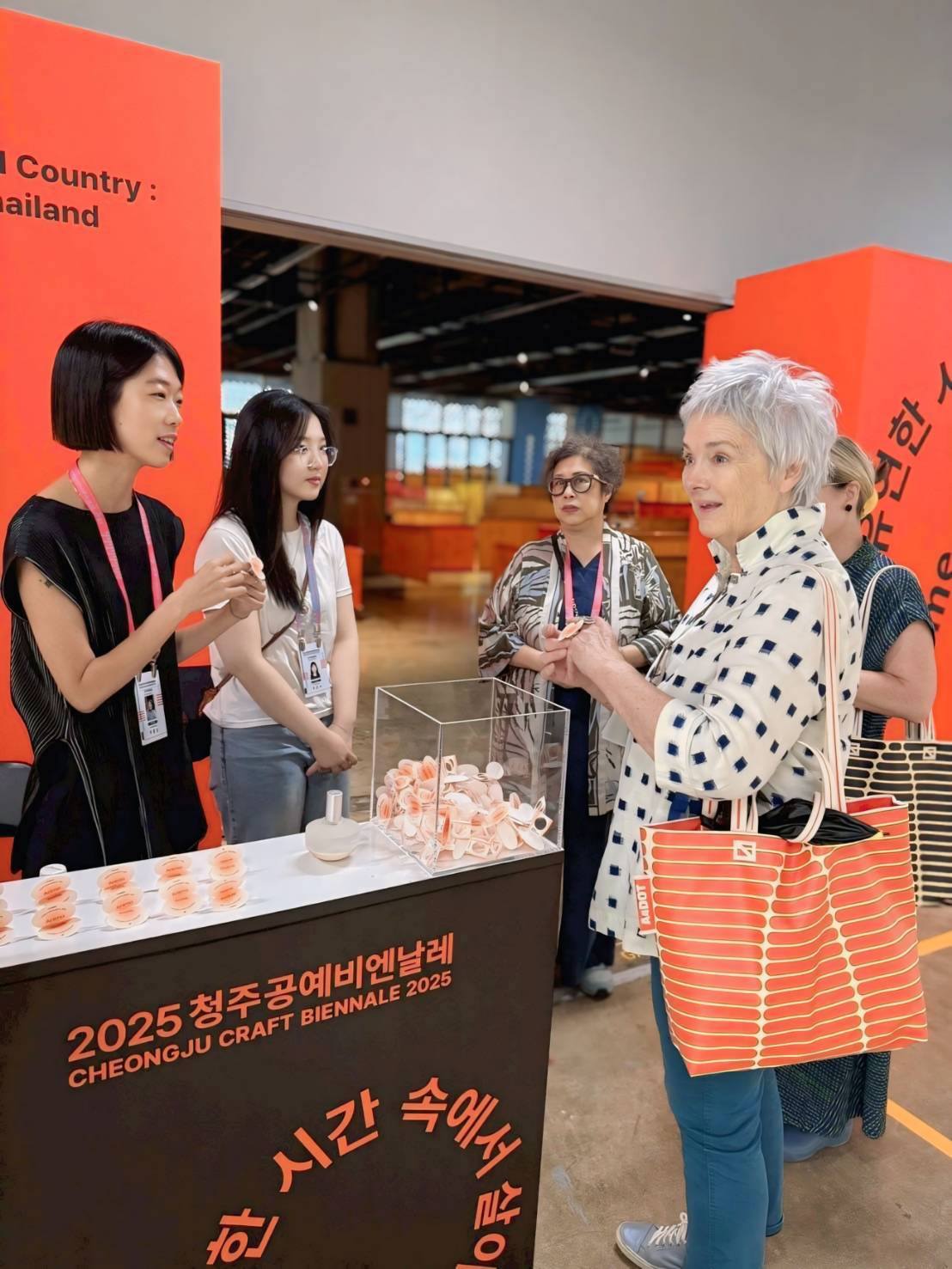
วันที่ 3 กันยายน 2568 นิทรรศการ 2025 Cheongju Craft Biennale เปิดให้ผู้สื่อข่าวเข้าร่วมชมเป็นครั้งแรก ณ Cheongju Culture Factory เมืองช็องจู สาธารณรัฐเกาหลี ภายใต้หัวข้อหลัก Re: Crafting Tomorrow โดยผู้อำนวยการฝ่ายศิลป์ Kang Jae-young
ภายในงานประกอบด้วย นิทรรศการหลักที่มีศิลปินจากทั่วโลก นิทรรศการผลงานประกวด และนิทรรศการประเทศรับเชิญ ประเทศไทย – Living in an Elastic Time (ชีวิต เวลา ยืดหยุ่น) โดย นางเกษร กำเหนิดเพ็ชร ผู้อำนวยการสำนักงานศิลปวัฒนธรรมร่วมสมัย ได้เข้าร่วมและพบปะกับศิลปินและผู้ชม และมี นางกฤติยา กาวีวงศ์ และ นายอังกฤษ อัจฉริยโสภณ ผู้อำนวยการฝ่ายศิลป์ของนิทรรศการประเทศไทย นำชมนิทรรศการ
นิทรรศการประเทศไทยยังสร้างมิติใหม่ให้กับผู้ชมผ่านการร่วมมือกับ Receptor แบรนด์น้ำหอมเกาหลี ที่ออกแบบกลิ่น Anima ซึ่งเป็นกลิ่นพิเศษสะท้อนความรู้สึกและบรรยากาศของประเทศไทย ถ่ายทอดประสบการณ์ศิลปะร่วมสมัยผ่านประสาทสัมผัสทางกลิ่น
อีกหนึ่งไฮไลต์ของงานคือ การแสดงสดของฤกษ์ฤทธิ์ ตีระวนิช ด้วยการทำ ผัดไทยกิมจิเนื้อย่าง ระหว่างงาน เกิดเป็นศิลปะที่ผสมผสานรสชาติไทยและเกาหลีเข้าด้วยกันอย่างสร้างสรรค์ การแสดงครั้งนี้ไม่เพียงสะท้อนถึงการแลกเปลี่ยนทางวัฒนธรรม แต่ยังเปิดพื้นที่แห่ง สุนทรียศาสตร์เกี่ยวเนื่อง ที่เน้นการสร้างความสัมพันธ์ระหว่างศิลปิน ผู้ชม และประสบการณ์ร่วมกัน ผ่านการกิน การสนทนา และการมีส่วนร่วม จนกลายเป็นพื้นที่ศิลปะที่เชื่อมโยงผู้คนเข้าหากัน
นิทรรศการเปิดให้เข้าชมระหว่างวันที่ 4 กันยายน – 2 พฤศจิกายน 2568 ณ Cheongju Culture Factory เมืองช็องจู สาธารณรัฐเกาหลี




Pim Sudhikam
1 DECEMBER 2025
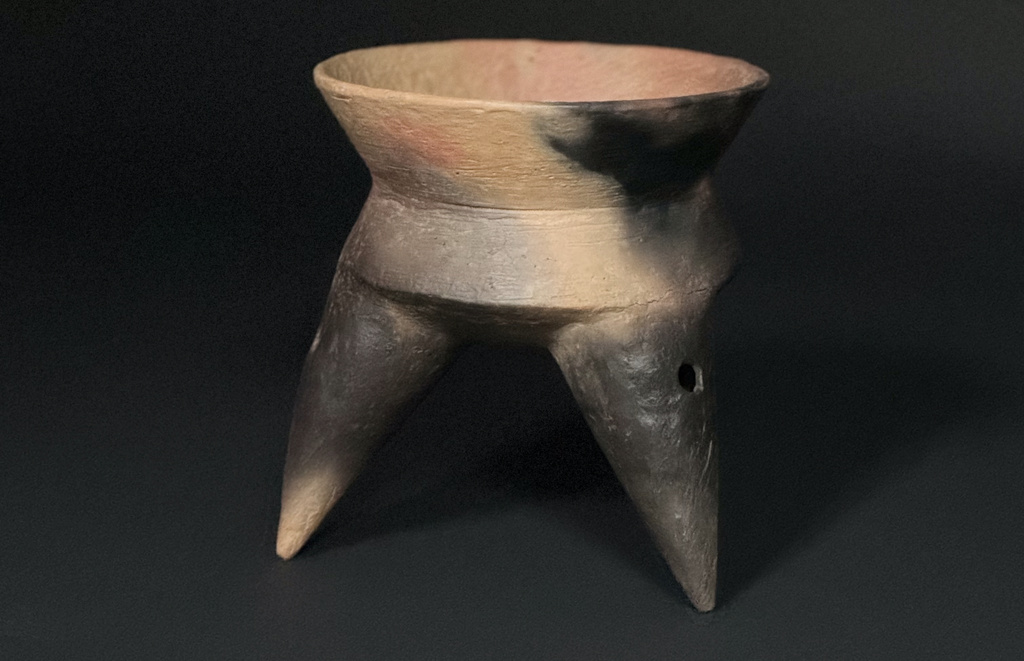
Pim Sudhikam, Tripod vessel, 2024, Earthenware, Hand-built, Pit fired, 21x23x23 cm. Photo: Pim Sudhikam
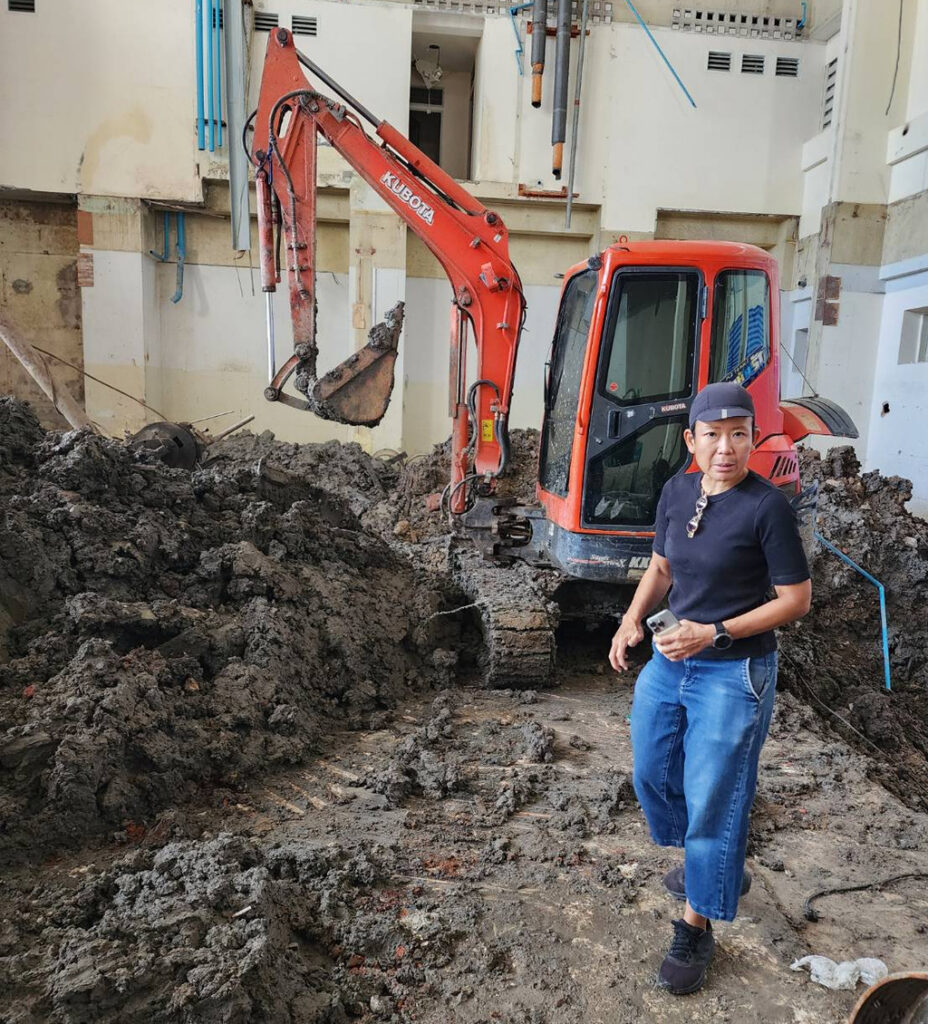
Pim Sudhikam explores the bond between maker and place by remaking ancient Thai vessels from contemporary excavation clay, realigning history with the modern urban setting.
Pim Sudhikam is a long-standing Thai ceramic artist who uses clay to understand the modern condition. Her previous exhibition, Petrified Knots (Bangkok, 2021), featured seemingly easy-to-untangle knots rendered in fired clay, reflecting on insurmountable problems (see Messenger Through The Twilight: A clay apocalypse)
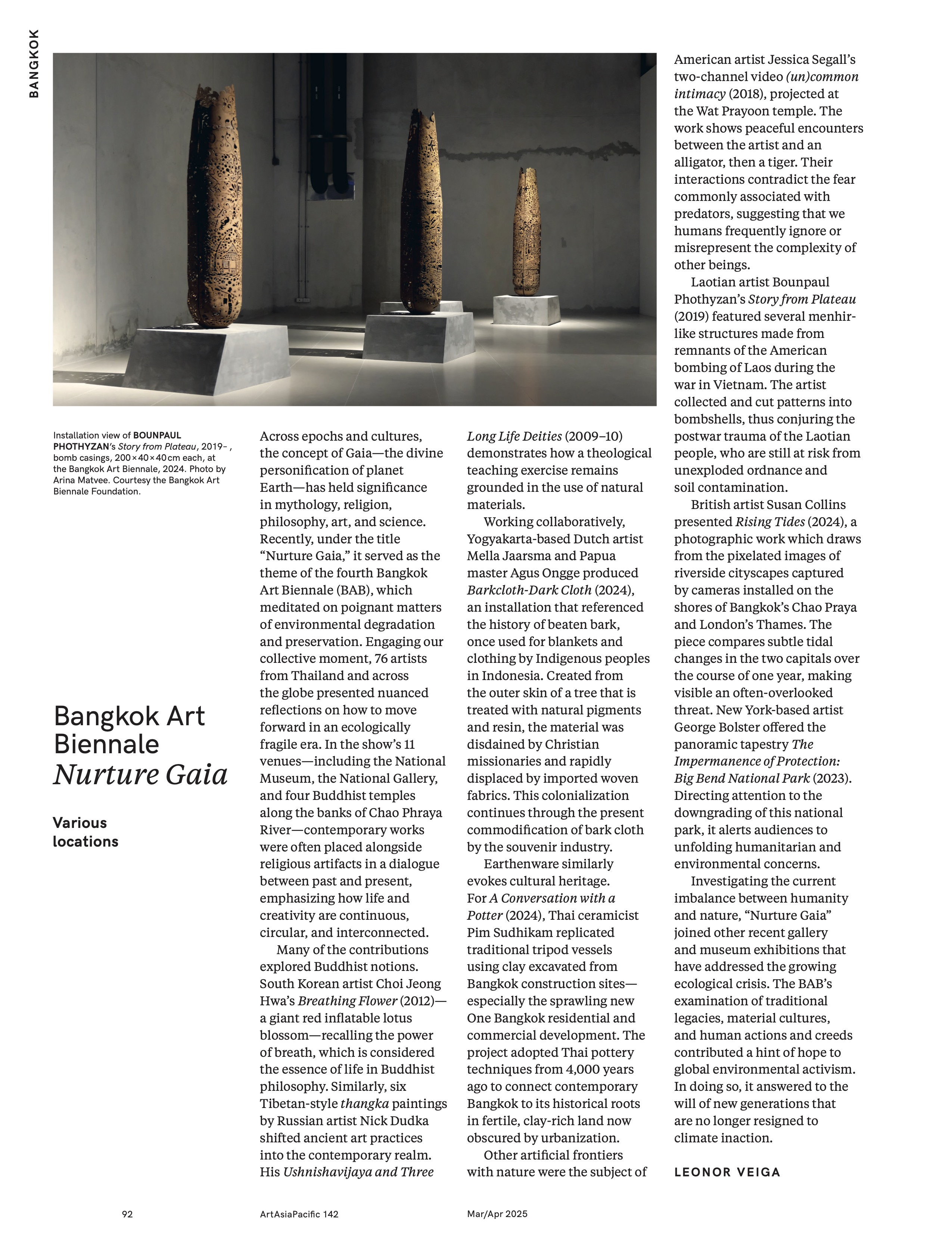
Her installation, “A Conversation with a Potter” (Bangkok Art Biennale, 2024), drew a connection between the ancient Baan Kao people from Western Thailand and modern Bangkok, specifically One Bangkok, a mixed-use development in the heart of Bangkok, where the work was exhibited. The Baan Kao artefacts are 4,000 years old, yet are made from the same fertile, clay-rich land on which the modern urban Thai capital is grounded. Pim Sudhikam combines a recreation of ancient three-legged pots with contemporary forms, suggesting the mechanical assembly of industrial gears—all from the same unchanging clay. All the works were hand-built and undecorated, creating the appearance of a unified archaeological display.
CLICK IMAGE TO VIEW GALLERY
We ask Pim Sudhikam about the inspiration for this seminal installation.
✿ Can you say what inspired you to use clay from excavation sites?
I look at various ancient cultures where there were potteries. There’s a link between where clay is found and where pottery exists, probably because of the logistics and practicality. I’m impressed with that fact nonetheless. I sense the intense bondage between the maker-the place-the material-the making. Looking at my own practice, since being born, raised and living in an urban setting, I lack such bondage.
In the context of the Bangkok Art Biennale 2024 theme “Nurture Gaia”, I wanted to emphasise this connection. Therefore, I searched for workable clay in Bangkok and ended up with clay from excavation sites. Bangkok is built on paddy fields on the Chaophraya Delta. So my assumption was that there must be good clay somewhere down there. After a couple of tests from different locations, it proved to be correct. I took the clay from many locations. They are all earthenware and are slightly different colours after firing.
I don’t intend to use that clay for sustainable purposes, but for the meaning of it, more like the agency of material and place.
Then I started to look at the historical significance of the clay location, too. But that’s for my future projects.
✿ What are the forms you made based on?
The Tripod vessels are an imitation of vessels from the Baan Kao Neolithic civilisation in Thailand. I imitate them in order to make a conversation with whoever made those vessels. My hypothesis is that I would find insight through making the same objects in a similar manner. First of all, I was so impressed with how advanced the forms are. They were so well-made and of uniform thickness. The design, proportion and detail are intended. And so on. The more I imitate, the more I appreciate and read the form as self-ornament (angular wall, 3-legged).
Then I want to transfer that language of form to my own design informed by my zeitgeist. I keep the forming technique hand-built and try to leave lots of production marks, i.e., fingerprints. I design forms that are self-ornamented (with many legs, hair, or fins, depending on how you want to call them), and the ornament is the structure at the same time. A pot with three legs became a pot with fins. The repetitive ribs are also based on industrial objects like heatsink, metal reinforcement structure and gears. For me to make hand-made, industrial-looking objects is to emphasise my desire to make things. And then I observed them deformed. And I am so intrigued. And that leads to the Remnant series.
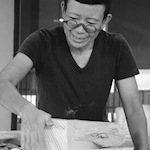
Pim Sudhikam is a contemporary Thai ceramic artist and educator whose professional practice utilises hand-built clay forms to investigate the complexities of the modern condition, often focusing on the deep connection between materiality, history, and place within an urban context. Trained as designer, her work, which has been featured in major exhibitions like the Bangkok Art Biennale, reinterprets ancient Thai vessels (such as the 4,000-year-old Baan Kao tripods) and blends them with contemporary industrial aesthetics. She is known for her conceptually driven installations that establish a dialogue between historical continuity and the enduring nature of the earth. Visit pimsudhikam.com and follow @psudhikam
On the 4th Bangkok Art Biennale
By Hung Duong
December 6, 2024 12:05 pm

I ALIGHTED FROM THE BTS SKYTRAIN at exactly 3 PM. The contrast between the refrigerated air inside the train and the station’s cemented heat quickly evaporated my midday drowsiness and sharpened my awareness: Bangkok, with its cacophonous and seditious logic-in-chaos. As I descended into the rambunctious streets below, street vendors dotted the pavement, selling sliced watermelon, Isan sausages, and lunchboxes. Traces of the city’s age-old thrifty traditions still jostled with its ambitious modernization. The key to understanding Bangkok is to walk the tightrope between these equally forceful impulses.
The Bangkok Art Biennale (BAB) is a somewhat recent addition to the city’s flourishing art scene. Scattered across eleven venues, the biennial split itself into two paths: While the River Route followed the Chao Phraya, with its ancient temples and national power seats like the National Museum, the City Route intersected with mazelike train lines to include contemporary art spaces and developments such as the Bangkok Art and Culture Centre (BACC) and the mint One Bangkok complex. A cartography of Bangkok and its parallel manifestations, BAB and its seventy-six artists strove not only to showcase its breadth of artistic creativity and engagement, but also to paint a complex portrait of its home city as a melting pot for the old and new, the local and the foreign.
Navigating this intricate web was no easy feat. As I shifted trains and attempted to balance venues’ opening hours, unexpected traffic-induced delays, and more than 240 artworks, Bangkok seemed to capriciously dole out challenges instead of clues. Many times, I had to take a breather and adjust myself to the unique challenges of mental funambulism. Walk with the city, not against it. And onward I continued, feeling the invisible arteries of this city’s artistic heart.

Slowly, the veins became visible as themes emerged. Met with Bangkok’s uncharted territories, the artists resorted to fantasy as a means to anchor their works. At Queen Sirikit National Convention Center (QSNCC)—Thailand’s first convention center, its architectural design inspired by the chitlada dress patterns favored by the Queen Mother, who modernized the path of Thai weaving craftsmanship—I meandered the endless corridors before burrowing into the equally expansive basement, where speculative video works wove stories that subverted and contemporized dominant historical discourses. Drawing from her ancestral lineage of South Asian indentured labor in colonial Malaya, Priyageetha Dia’s mixed-media installation Spectre System, 2024, crafted a simulated gaming environment, where the protagonist was forced to navigate a plantation’s haunting landscape—riddled with ghostly orbs and eerie murmurs—as they unearthed memories of racial exploitation and dispossession. Similarly, Lisa Reihana conjured an oceanic sci-fi realm in her video Groundloop, 2022, to celebrate a fantasy voyage from Aotearoa New Zealand to Australia, where Indigenous travelers explored architectural wonders and advanced seafaring technologies—had their worlds been untouched by colonialism.
Yet fantasy is not all about subversion. In Bangkok, a renowned entertainment land for tourists, fantasy can also be kitsch—without its usual negative, lowbrow connotations in the West. Most Bangkokians embrace kitsch, or at least view it as a part of daily life, proliferating through Buddhist amulets, Thai pop idol figurines, and Gundam sculpture at traffic roundabouts. In front of BACC, at the bustling junction of Rama I and Phaya Thai Roads, sat Choi Jeong Hwa’s mega-scale inflatable-lotus Breathing Flower, 2018–24. Taking this Buddhist symbol of purity and turning it into a site-specific tourist magnet, Choi posed the question of what might be deemed “high art” in a Thai context. Likewise, Thavika Savangwongsakul transformed the walls that lined the BACC’s spiral ramp—a semi-kitschy approximation of the Guggenheim structure—into a teen-pop intervention, titled It’s all about ME ( ˘͈ ᵕ ˘͈♡), 2024, of angsty abstract paintings, neon-pink graffiti, and a sad-emoji selfie, reflecting the young Bangkok artist’s state of mind as she navigates the city’s entangled art landscape, using virtual-realm tokens as guideposts.

Fantasy in Bangkok is nurtured in its feminine psyche, despite its facade of patriarchal monuments and masculine high rises. BAB’s title, “Nurture Gaia,” positioned this feminine energy at the forefront of its artistic nexus. Gaia’s earthy-elemental, generative power materialized through the works of Pim Sudhikam, with her pottery installation A Conversation with a Potter, 2024, which used clay excavated from underground during the construction of Bangkok subway projects at historical sites. Displaying her numerous pots alongside a skeleton made of PVC pipes (commonly used in underground sewage) at One Bangkok, a new development complex near the famous Lumphini Park, Sudhikham attempted a conversation not only with the site but also with Thai potters from bygone times.
Nonetheless, Gaia’s association with the earthly realm also connected her with monsters and death. At the National Gallery, housed in the previous building of the Royal Thai Mint in the historical Phra Nakhon District, we witnessed a more sinister visualization of Gaia’s divine femininity though Agnes Arellano’s Project Pleiades, 2024, featuring cold-cast marble statues of goddesses across cultures. From the blue-skinned Kali, the Hindu goddess of destruction, to Black Magdalene, the disputed disciple of Christ, these female deities united in silent defiance against the male gaze’s stereotypical objectification. Extending this trajectory, Busui Ajaw’s frighteningly red painting series at BACC blended the various manifestations of Amamata, the first mother in Akha folklore, with her own internal demons that materialized through childhood trauma from the military invasion of her homeland in Myanmar.

Not only rooted in mythologies, the feminine drive of BAB also found its expression through the figure of the daring flaneuse, who walks streets that are often hostile toward women while delivering commentaries about the world. Artist and filmmaker Som Supaparinya transformed a room in the National Gallery into a cinematic space for The Rivers They Don’t See, 2024, detailing her laborious journey on rivers that run from the Thailand-Myanmar border down to the Gulf of Thailand, to capture the micro-narratives of fishermen whose livelihood is constantly in compromise due to administrative and environmental changes. This courage to venture into potentially dangerous milieus also shone through in Jessica Segall’s video installation (un)common intimacy, 2018, at Wat Prayoon: Engaging in a gentle dance with large predators in US states that allow private ownership of these animals, Segall interrupted the circuit of control and entertainment to which they are subjected.
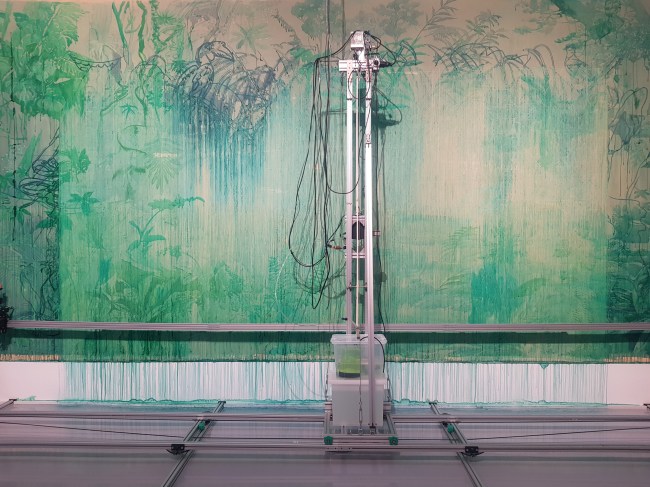
Underneath all of Bangkok’s characteristics lies the core of its dynamism: It is a city of foreigners, dating back to the Kingdom of Siam’s multicultural traditions, where different groups of migrants—Chinese, Vietnamese, Lao, Khmer, Burmese, and eventually European—were granted permission to build their communities in newfound land. Yet, amid the cumbersome discourse of Thai ethnonationalism, this culturally diverse fabric became disrupted by enforced cultural assimilation (read: Thaification) beginning in the twentieth century. The “foreigners” thus became ghosts that sleep in this Thai household’s basement, and yet their bones never ceased to rattle! If you pay attention as you walk around the biennial venues, you will detect their spectral signals, such as Moe Satt’s plaster-cast, empty T-shirts at BACC, ghostly remnants of his performance critique Body Inside T-shirt, 2024, on Myanmar’s volatile political prospects. Or in Artificial Green by Nature Green 4.0, 2024, where a “ghost in the machine” is programmed to simultaneously paint and erase a large-scale painting of lush green vegetation, created by artist couple Bagus Pandega and Kei Imazu to allude to humanity’s generative and destructive impact on trees in urban environments. Or perhaps Dusadee Huntrakul’s constellation of enigmatic UFO drawings, faux-fossils cast from seashells, and totemlike ceramics that nestled into the display cabinets of the National Museum, camouflaging as artifacts to poke fun at the seamless narrative of nation-building generated by such institutions.
Not only acting as silent critics of sociopolitics, the foreigners’ haunting presence also reminds us of the fragility and evanescence embedded in human connections. In cities, where life passes us by too quickly, can we stop for a moment to observe, to care, to watch out for one another? I found myself sitting silently at BACC, in front of Singaporean artist Amanda Heng’s poignant photo, dated 2014, from her reconstituted series “Always by My Side,” of her grandmother’s last days, in which her mother placed her grandmother’s feet on her shoulders. An act of reverence and intimacy. I slowed down to breathe in the sorrowful helplessness of a pair of hands holding a small bird—a wall-protruding installation named Still Life, 2023, by the Danish Norwegian duo Elmgreen & Dragset. And I slunk down near The Engineers, 2024, two somber gate-shaped structures inside a monastery in Wat Bowon, made from singed Neem wood by Cole Lu to invoke the cycle of life and death.
Maybe, we all are, or will become, foreigners somewhere, whose fantastic feats and feminine flair stick out like a sore thumb. In this global climate that is becoming increasingly intolerant of things that don’t fit in, I hope we can find solace, that small enclave where we can just be. And I hope art will continue to uphold that haven.
The Fourth Bangkok Art Biennale, “Nurture Gaia,” is on view through February 25, 2025.

ที่มา มติชนสุดสัปดาห์ ฉบับวันที่ 13 - 19 ธันวาคม 2567
คอลัมน์ อะไร(แม่ง)ก็เป็นศิลปะ
ผู้เขียน ภาณุ บุญพิพัฒนาพงศ์
เผยแพร่ วันพุธที่ 18 ธันวาคม พ.ศ.2567
พิม สุทธิคำ ศิลปินผู้สร้างสนทนา
ระหว่างช่างปั้นหม้อจากสองกาลเวลา
ในเทศกาลศิลปะ บางกอก อาร์ต เบียนนาเล่ 2024
พิมมักท้าทายตนเองในการก้าวข้ามข้อจำกัดทางเทคนิคและวัสดุ สู่วิธีคิดและรูปแบบของงานเซรามิกร่วมสมัย
พิมยึดถือว่าวัสดุและทักษะการจัดการกับวัสดุเป็นเรื่องสำคัญ เพราะเธอเชื่อว่า กระบวนการสร้างงานด้วยมือคืออำนาจของปัจเจกบุคคล ปฏิสัมพันธ์ระหว่างช่างปั้นกับดิน และคุณสมบัติตามธรรมชาติของดิน เป็นเรื่องที่ไม่อาจแยกขาดออกจากแนวความคิดทางศิลปะ
เธอยังสนใจรูปทรงของวัตถุในระบบอุตสาหกรรม โดยเฉพาะอย่างยิ่ง เมื่อวัตถุเหล่านั้นตกอยู่ในสภาวะผุกร่อน หรือถูกกลืนกลายไปในธรรมชาติ เพราะนั่นแสดงให้เห็นถึงการยื้อยุดระหว่างความพยายามของมนุษย์ในการสร้าง ควบคุม หรือกำหนดสิ่งต่างๆ โดยต่อสู้กับการกลืนกินอย่างไร้ความปราณีของกาลเวลา
เธอมักพิจารณาความสัมพันธ์ระหว่างตนเองและสิ่งภายนอกผ่านกระบวนการทำงานกับดิน และใช้ดินในการอธิบายปรากฏการณ์ที่เธอต้องการทำความเข้าใจ ผลงานของเธอมีตั้งแต่ภาชนะถ้วยชาม ไปจนถึงศิลปวัตถุ อย่าง ประติมากรรม ศิลปะจัดวาง ศิลปะเฉพาะพื้นที่ และโครงการศิลปะที่สร้างปฏิสัมพันธ์กับผู้ชม

ในเทศกาลศิลปะ บางกอก อาร์ต เบียนนาเล่ ครั้งนี้ พิมนำเสนอผลงาน A Conversation with a Potter ที่ได้แรงบันดาลใจจากการที่เธอเติบโตและอยู่อาศัยในพื้นที่ใจกลางเมืองหลวง ท่ามกลางการเปลี่ยนแปลงของเมืองใหญ่
พิมตั้งข้อสังเกตต่อการก่อสร้างโครงการขนาดใหญ่ ที่ขุดเจาะผืนดินลึกลงไปจากพื้นถนน จนพบดินเหนียวในชั้นดินลึก ซึ่งมีลักษณะไม่ต่างกับดินเหนียวที่มนุษย์ยุคก่อนประวัติศาสตร์นำมาใช้ทำภาชนะดินเผา ดินเหนียวแบบเดียวกันนี้นี่เอง ที่ก่อตัวขึ้นจากการทับถมของซากพืชซากสัตว์ผ่านกาลเวลามานับล้านปี กลายสภาพเป็นชั้นดิน ก่อนที่เมืองในยุคสมัยใหม่จะถูกสร้างขึ้น ดินเหล่านี้เชื่อมต่อเป็นผืนเดียวกัน จากแผ่นเปลือกโลกเดียวกันกับแหล่งวัฒนธรรมโบราณ ทางภาคตะวันตกของประเทศไทย
พิมนำดินเหนียวที่อยู่ลึกลงไปใต้ชั้นดินใต้โครงการก่อสร้างในพื้นที่ประวัติศาสตร์ของกรุงเทพฯ และโครงการรถไฟฟ้าใต้ดินในจุดต่างๆ ของกรุงเทพฯ มาใช้เป็นวัตถุดิบในการสร้างภาชนะเซรามิกขึ้นด้วยมือและปลายนิ้วของเธอ
เหล่าบรรดาภาชนะที่มีรูปร่างหน้าตาคล้ายภาชนะดินเผาในยุคก่อนประวัติศาสตร์ และภาชนะที่มีรูปทรงที่สะท้อนวิถีชีวิตในยุคปัจจุบันเหล่านี้ เป็นเสมือนสื่อกลางในการแลกเปลี่ยนบทสนทนาระหว่างช่างปั้นหม้อจากสองกาลเวลา ที่เชื่อมโยงความทรงจำของผืนดิน ด้วยดินจากแผ่นเปลือกโลกเดียวกัน ผ่านกาลเวลาและสถานที่ที่แตกต่างกัน
“งานชุดนี้เราทำเป็นภาชนะเซรามิก โดยใช้ดินที่เสาะหาจากสถานที่ต่างๆ ในกรุงเทพฯ ด้วยความที่เราทำงานกับวัตถุดิบที่หาได้จากผืนแผ่นดินโดยตรง แต่ในปัจจุบันเรามองไม่เห็นดินเหล่านี้แล้ว เพราะมันกลายเป็นพื้นที่เมืองไปหมด แต่เรามีความปรารถนาบางอย่างที่จะเชื่อมโยงกับดินเหล่านี้ให้ได้ เราก็เลยไปหาในสถานที่ที่มีการขุดเจาะพื้นดิน เช่น โครงการก่อสร้างรถไฟฟ้าใต้ดิน และสถานที่ก่อสร้างต่างๆ โดยเฉพาะอย่างยิ่ง ในพื้นที่ตั้งของพื้นที่แสดงงานนี้อย่าง โครงการ วัน แบงค็อก (One Bangkok) เราก็มาเก็บดินในตอนที่กำลังมีการก่อสร้างอยู่ นำมาสร้างเป็นชิ้นงาน เพื่อพยายามทำความเข้าใจว่าคนเราทำสิ่งของต่างๆ ขึ้นมาทำไม ทำไมเขาต้องตั้งใจทำสิ่งเหล่านี้ขนาดนั้น เพื่อให้มันอยู่ได้ยืนยาวกว่าตัวเอง”

ผลงานศิลปะในรูปของภาชนะเซรามิกที่พิมสร้างขึ้นมา นอกจากจะมีหน้าตาคล้ายกับ หม้อสามขา ภาชนะโบราณที่ถูกค้นพบจากแหล่งโบราณสถานแล้ว ภาชนะเหล่านี้ยังถูกจัดวางล้อกับลักษณะของหลุมศพโบราณที่ถูกค้นพบตามแหล่งอารยธรรมก่อนประวัติศาสตร์อีกด้วย
“ภาชนะเซรามิกชุดนี้เราทำขึ้นโดยได้แรงบันดาลใจมาจากหม้อสามขา ภาชนะรูปแบบเฉพาะที่ถูกค้นพบในแหล่งวัฒนธรรมบ้านเก่า ในจังหวัดกาญจนบุรี และแหล่งโบราณคดีหนองราชวัตร ในจังหวัดสุพรรณบุรี ซึ่งเป็นพื้นที่ที่มีความต่อเนื่องเชื่อมโยงกัน
เราอยากเปรียบเทียบว่าแหล่งวัฒนธรรมไหนที่สามารถเชื่อมโยงกับผืนแผ่นดิน แล้วพวกเขาทำได้อย่างไร ลักษณะของงานของพวกเขานั้นน่าสนใจ พอเราได้ไปเห็นแล้ว เราก็รู้สึกว่า งานฝีมือ (Craftsmanship) นั้นสำคัญต่อมนุษยชาติมากๆ เพราะมันแสดงให้เห็นถึงความปรารถนาของมนุษย์ที่จะทำอะไรบางอย่างไปจนตาย เราก็เลยอยากทำขึ้นมาบ้าง”

“เราอยากตอกย้ำว่าการสร้างสิ่งต่างๆ ด้วยมือนั้นมีความสำคัญอย่างไร เราจึงวางวัตถุดิบที่เป็นดินเปรียบเทียบกับภาชนะที่ถูกปั้นขึ้นมาให้ดู ว่าจากก้อนดินก้อนหนึ่ง พอถูกมือปั้นขึ้นมาแล้วจะมีมิติรูปทรงได้อย่างไร ก้อนดินและภาชนะนี้มีน้ำหนักเท่าๆ กัน เพียงแค่ผ่านกระบวนการจำนวน 6,451 ครั้ง ที่ทำให้ก้อนดินกลายเป็นภาชนะ หลักฐานก็คือรอยนิ้วมือที่หลงเหลืออยู่บนภาชนะชิ้นนี้ เราต้องการสื่อถึงสภาพที่แท้จริงของผืนดินตรงนี้ ว่ามีสิ่งนี้อยู่ และเราสามารถสร้างวัตถุบางอย่างให้ถูกค้นพบได้จากการทำงานด้วยมือ”
สิ่งที่น่าสนใจก็คือ แทนที่พิมจะเลือกใช้เทคโนโลยีปัจจุบันในการสร้างงานเซรามิกเพื่อความสะดวกรวดเร็ว เธอกลับย้อนกลับไปใช้วิธีการแบบเดียวกันกับในยุคสมัยที่หม้อสามขาถูกสร้างขึ้น ด้วยการพยายามเลียนแบบกระบวนการทำงานแบบโบราณ อย่างการใช้มือขึ้นรูป ไปจนถึงกระบวนการเผาเตาฟืน ราวกับกำลังจำลองโบราณวัตถุเหล่านั้นให้เกิดขึ้นมาใหม่ในยุคปัจจุบัน
“เหตุผลที่เราทำงานที่สร้างบทสนทนาโต้ตอบกับภาชนะหม้อสามขา เพราะเรารู้สึกว่า ในฐานะที่เราดำรงอยู่ในบทบาทของคนทำงานเครื่องปั้นดินเผาจนถึงปัจจุบันนี้ เรายังปรารถนาสิ่งเดียวกันกับคนในยุคโบราณ คือการสร้างภาชนะ เราจึงใช้วัตถุดิบที่หยิบฉวยมาจากพื้นที่ใกล้ตัวมากๆ และใช้การตกแต่งที่ไร้การตกแต่ง คือใช้เนื้อดินเป็นตัวสร้างรูปทรงและรายละเอียด ไม่มีการวาดลวดลาย หรือการขูดขีดเพื่อสร้างพื้นผิวแต่อย่างใด สีของภาชนะก็คือสีตามธรรมชาติของเนื้อดิน ถึงแม้จะเป็นดินที่มาจากสถานที่ที่แตกต่างกัน และทำในกระบวนการที่ต่างกัน แต่พอทำออกมาก็เป็นสีเดียวกันหมด เราอยากจะแสดงความเป็นเนื้อแท้ของวัสดุชนิดนี้ออกมาให้มากที่สุด”

นอกจากผลงานภาชนะหม้อสามขาแล้ว งานชุดนี้ยังมีภาชนะเซรามิกอีกชุดที่มีลักษณะคล้ายฟันเฟืองของเครื่องจักรกลในระบบอุตสาหกรรมจัดแสดงอยู่ในอีกห้องแสดงงานด้วย
“ที่งานชุดนี้ดูเหมือนเครื่องจักร เพราะเป็นอิทธิพลของคนในยุคนี้ที่เราเห็นอยู่ทุกวัน อีกอย่าง การทำรูปทรงแบบนี้ในเชิงจิตใต้สำนึกของเรา คือการที่เราอยากเพิ่มพื้นผิวให้มีพื้นที่ประทับรอยนิ้วมือมากยิ่งขึ้นอีก ถ้าดูใกล้ๆ จะเห็นว่าภาชนะแต่ละชิ้นมีรอยนิ้วมือเยอะมาก ทั้งหมดทั้งมวลคือ เราแค่รู้สึกว่าเราต้องการเชื่อมโยงกับผืนแผ่นดินด้วยการกระทำบางอย่าง”
ปรมพร ศิริกุลชยานนท์ ภัณฑารักษ์ของเทศกาลศิลปะ บางกอก อาร์ต เบียนนาเล่ ผู้ดูแลผลงานชุดนี้ กล่าวเสริมท้ายว่า

“การที่รูปทรงของงานชุดนี้มีความเป็นอุตสาหกรรมมากๆ นั้นแสดงให้เห็นถึงบทสนทนาหลายอย่าง ทั้งวัตถุดิบอย่างดิน ที่ได้มาจากเขตกรุงเทพฯ ชั้นใน ที่มีความเป็นเมืองสูง มีอภิมหาโครงการยักษ์ หรือแม้แต่การขนส่งมวลชนขนาดใหญ่ อย่างรถไฟฟ้าใต้ดิน ซึ่งเป็นภาพแทนของความเป็นปัจจุบันที่มุ่งไปสู่ความเป็นอุตสาหกรรมอันแข็งกร้าว กับภาชนะดินเผา ซึ่งเป็นงานผีมือที่มีความละเอียดอ่อน แตกง่าย ไปจนถึงการเป็นช่างปั้นหม้อในศตวรรษที่ 21 กับช่างปั้นหม้อในยุคก่อนประวัติศาสตร์ เพราะฉะนั้น งานชุดนี้จึงมีบทสนทนาที่ทับซ้อนกันหลายชั้นมาก”
ผลงาน A Conversation with a Potter โดย พิม สุทธิคำ จัดแสดงในเทศกาลศิลปะร่วมสมัยนานาชาติ บางกอก อาร์ต เบียนนาเล่ 2024 ตั้งแต่วันที่ 24 ตุลาคม 2567-5 กุมภาพันธ์ 2568 ณ พื้นที่แสดงงาน วัน แบงค็อก (One Bangkok) อาคาร The Storeys ชั้น 2 เปิดทำการ วันอังคาร-อาทิตย์ เวลา 12:00-20:00 น. ปิดทำการวันจันทร์ (เข้าชมฟรี) ตรวจสอบรายละเอียดเพิ่มเติมได้ที่ https://www.bkkartbiennale.com/
ขอบคุณภาพจากศิลปิน BAB 2024 ภาพถ่ายโดย Arina Matvee •
... อ่านข่าวต้นฉบับได้ที่ : https://www.matichonweekly.com/column/article_817813
Raksit Panya introduces five Thai ceramic artists whose work foretells an archeology of the present.
The exhibition is the collaboration between five Bangkok-based contemporary artists and Manipa Jayawan as a curator, who convenes the journey.
Ceramics and stone are the evidence of history, for both archeologists and geologists. Ceramics transfers the stories of past human civilization to the present day. Also, geologists analyze stone to picture the phenomena of long-pass events. Since many other materials decayed a thousand years ago, but ceramic still remains.
The Messenger Through The Twilight portrays the events of the past until now and on to the future. Especially, in the Anthropocene era, in which human footprint affects the world past the point of no return to the inevitable apocalypses. In this exhibition, artists portray their own transition from pre-apocalypse to post-apocalypse in many contexts.

https://fb.watch/3RLpgD8xK-/

Pongpipat Kaona. "Clay Play". Bangkok Post, 14 July 2016, p.9.


Design Update: Pim Sudhikam @22.00 minute.
Koaysomboon Top. "Breaking the Mould". Themagazine, Issue 3, February 2014, 58-59

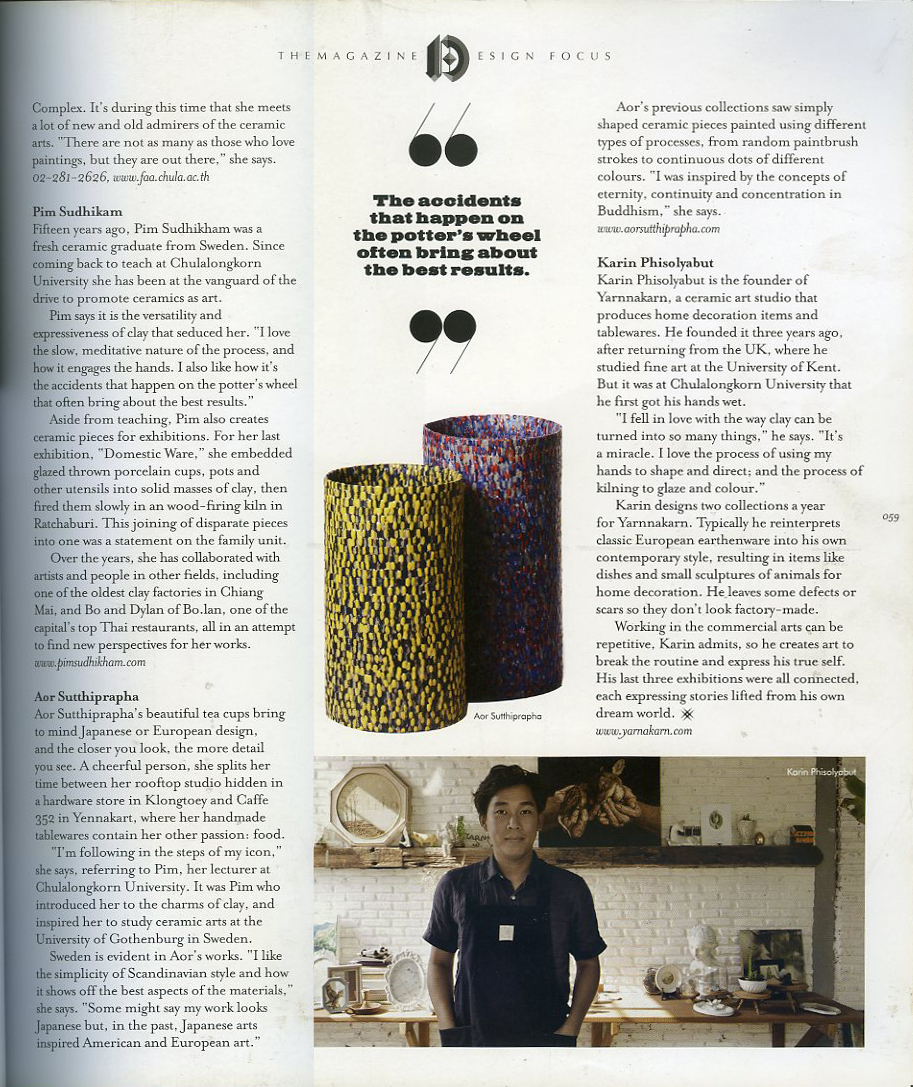




Curtin Brian. "Defects of Life" Art4D, July 2011, p.44-46.


Little, Andrews. "Mekong Art & Culture Project: Bridging the Regional Divide". Art Asia Pacific, No.59 July/August 2008, p.86-87.


